A calibration change is only a theory until the next log tests it. The first revision loop is how you turn that theory into evidence: capture a baseline, identify one measured problem, make one supported edit, and re-log under comparable conditions.
That sounds slow compared with changing several tables at once. It is faster than losing track of what caused the next result. A clean loop tells you what improved, what did not move, and what got worse.
1. Capture a Baseline That Can Answer a Question
The baseline is more than the first file you have available. It needs enough channels and a clear enough event to explain what the engine did.
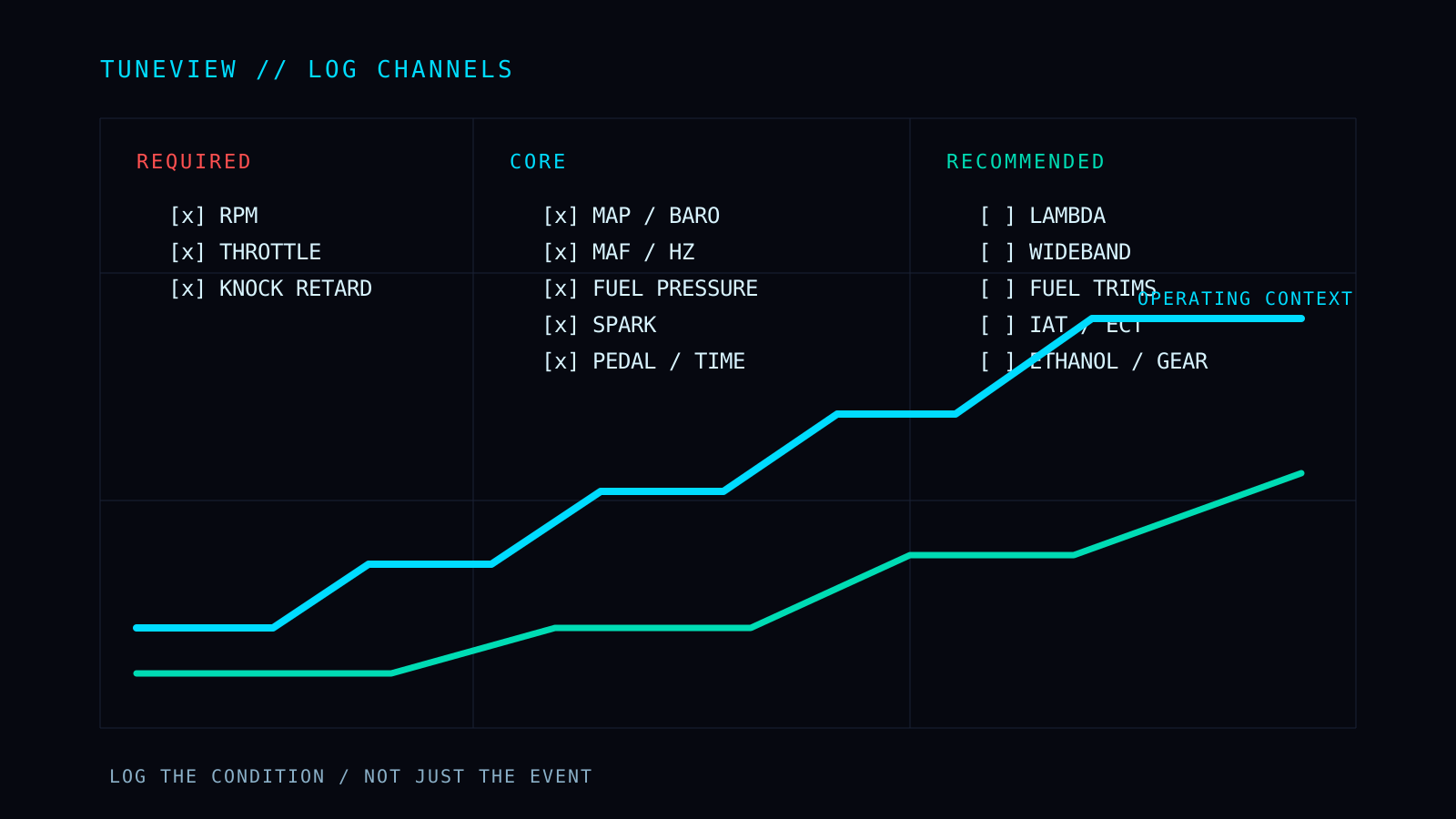
Start with RPM, throttle position, knock retard, MAP, MAF data, commanded and actual fuel pressure, spark, and the temperature channels that fit the question. Add accelerator pedal position for a driver-demand or torque question. The HP Tuners logging checklist explains the minimum context each problem needs.
Record the conditions around the pull or drive: fuel, gear, starting temperature, major hardware changes, and any unusual event. This is not paperwork for its own sake. It gives the follow-up a fair comparison point.
2. Name the Problem Before Opening the Editor
Do not start by browsing for a table that sounds familiar. Read the baseline by operating region and evidence:
- A fueling or airflow question needs the trim, lambda, MAF, MAP, and temperature context.
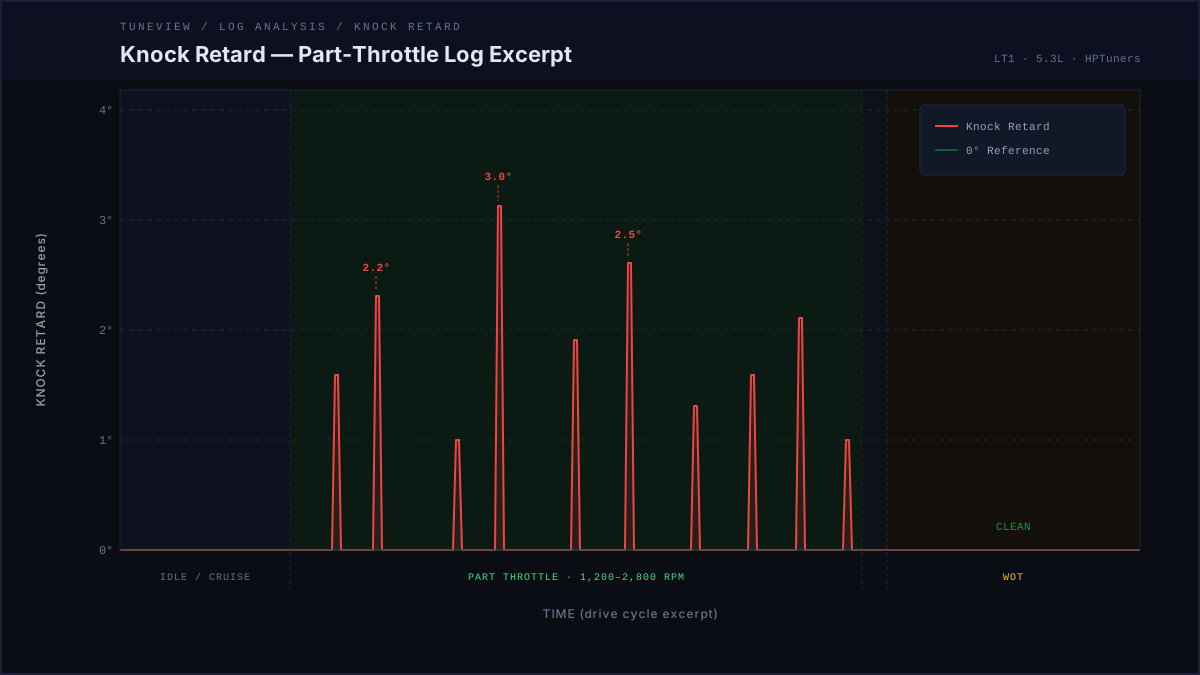
- A knock question needs RPM, load, spark, lambda, fuel pressure, and IAT beside the knock response.
- A boosted pull needs pressure ratio, not just throttle or RPM, to establish boost.
- A torque question needs pedal and throttle position plus the conditions around any gap.
The goal is a sentence you can test, such as: “In this logged RPM and load region, actual behavior missed the command while the surrounding channels remained comparable.” If you cannot write that sentence, collect a better log before changing the calibration.
3. Make One Evidence-Supported Edit
Make the smallest change that directly addresses the measured finding. Save it as a new calibration version and keep a note of the table, cells, and reason for the edit.
One edit does not mean one cell in every case. A measured region can span adjacent cells, and a smooth calibration surface matters. It means one hypothesis per revision round. Do not fix a fuel-trim pattern, change spark, revise torque limits, and alter startup behavior in the same pass if you expect the next log to teach you which action mattered.
If the finding concerns airflow, the MAF versus VE guide is a useful reminder that an accurate correction in the wrong model is still the wrong correction.
4. Re-Log a Comparable Event
The follow-up should test the same part of the drive. Keep the scanner configuration, sample rate, gear, and RPM range as close to the baseline as practical. Record changed conditions instead of pretending they did not happen.
Before comparing results, check:
- Was the engine at a similar thermal state?
- Did it reach a similar MAP/barometric-pressure ratio and load region?
- Were fuel and hardware conditions comparable?
- Is the follow-up long enough and clean enough to cover the original finding?
For boosted vehicles, temperature and pressure can move together while telling different stories. Log boost and IAT heat soak before calling a revision better or worse on a mismatched pull.
5. Accept the Verdict
There are only three honest outcomes for the measured problem:
- Improved — the intended metric moved in the right direction under comparable conditions.
- No change — the metric did not clear the improvement threshold, or the test did not prove a difference.
- Worse — the metric moved the wrong way, and the next pass needs a different explanation.
“No change” is useful information. It stops you from building more decisions on a correction that did not prove itself. “Worse” is useful too, as long as it is recorded instead of hidden.
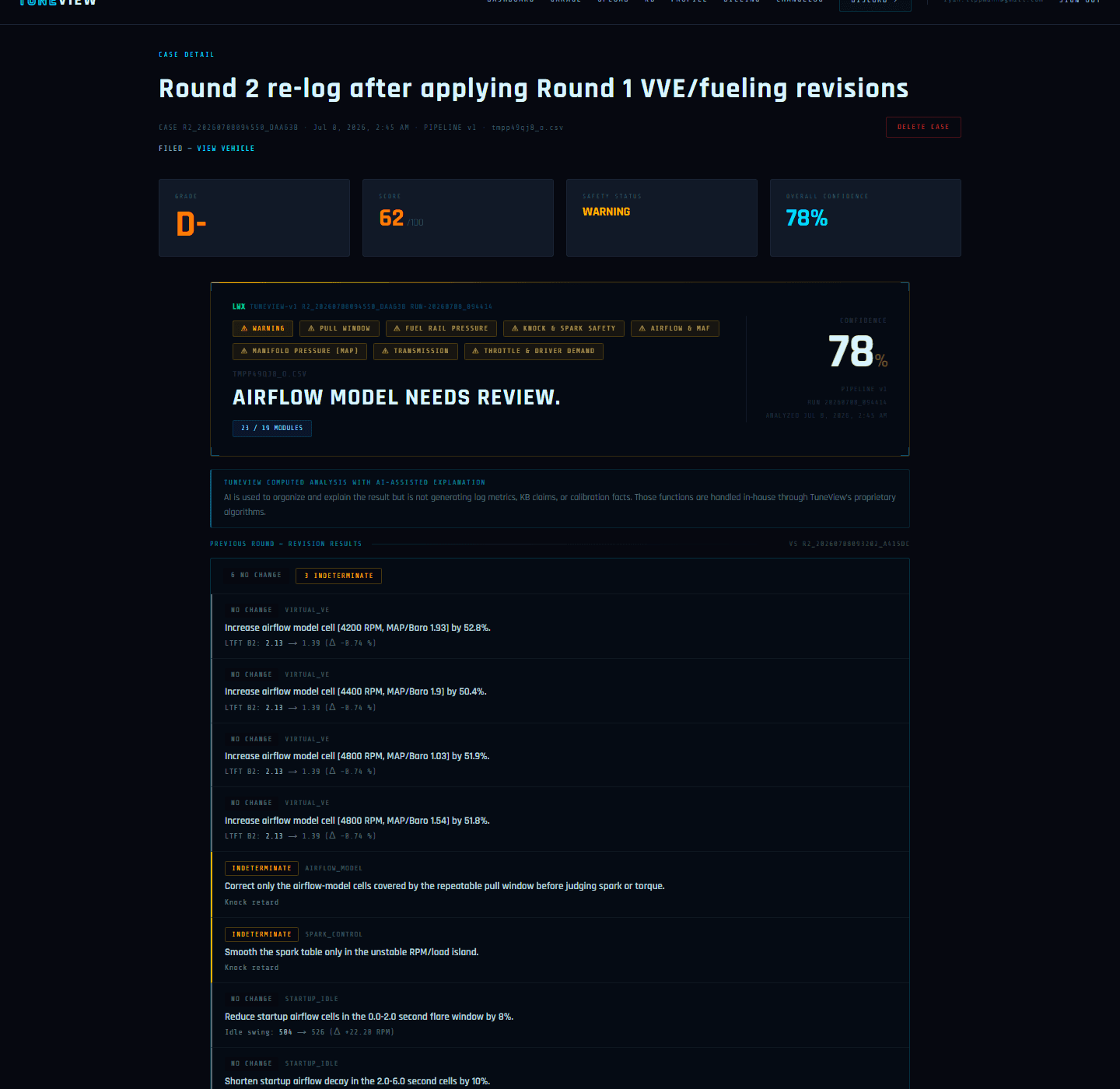
The 416 Whipple Sierra case study shows a real revision loop with all three kinds of verdict. One airflow-model result improved, two startup-idle changes got worse, and the next log exposed a new high-boost region that the first pass had not measured.
Let the Next Log Decide What Is Next
After the verdict, repeat the loop only for the remaining measured problem. A good tune is not one big flash. It is a record of tested changes, each checked against the engine that actually has to run them.
TuneView gives every Full Tune vehicle a baseline report, guided revision priorities, pre-flash table verification, and round-over-round verdicts. It never writes to your ECU or tune file. You make the edits; the follow-up log supplies the proof.
Full Tune is $69 one-time for one vehicle/motor, with unlimited analyses and revision rounds and no expiration.
TuneView helps HP Tuners users turn scanner logs into guided calibration revisions. Support for GM platforms is live.