// 01 · THE TRUCK
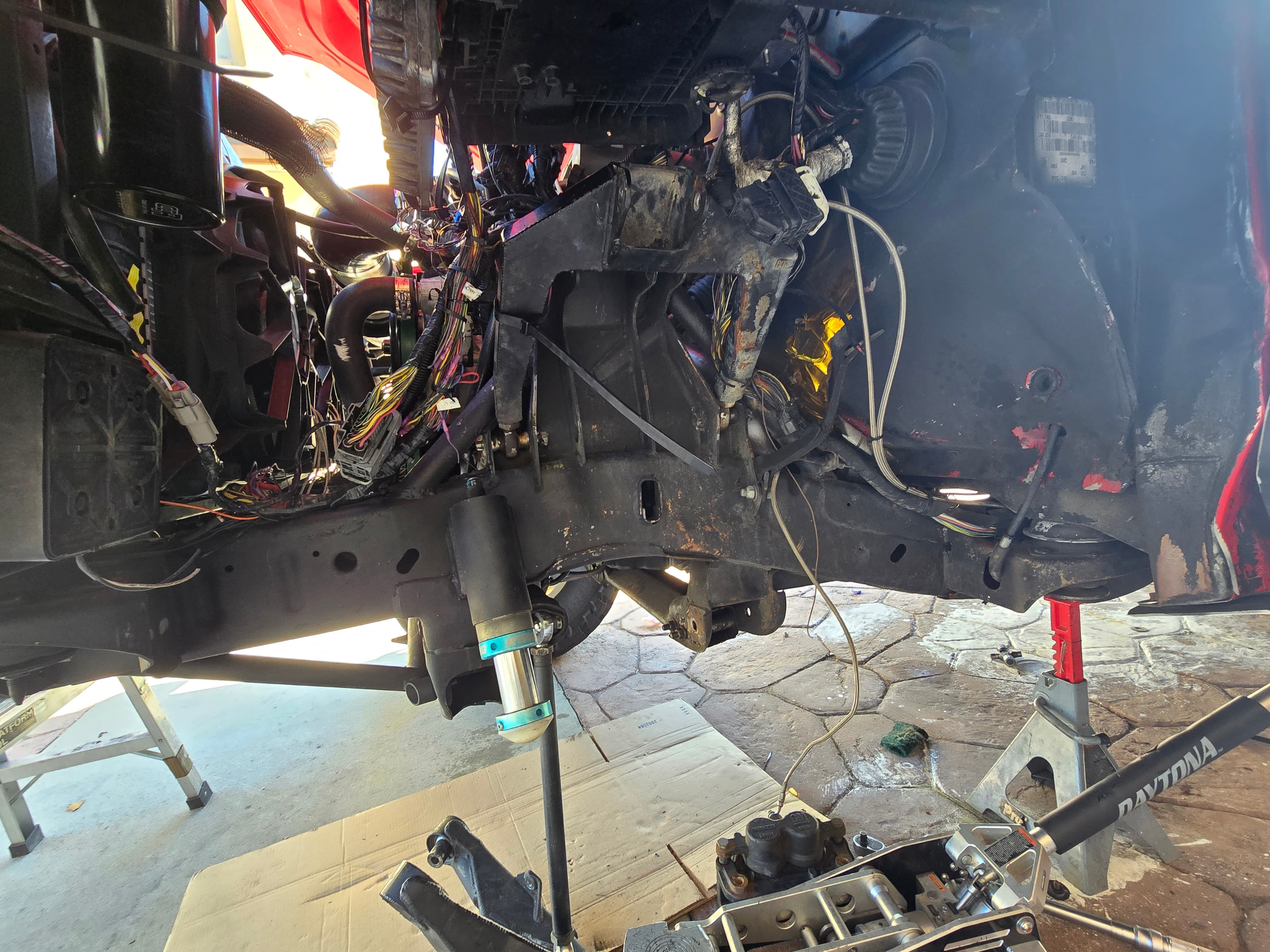
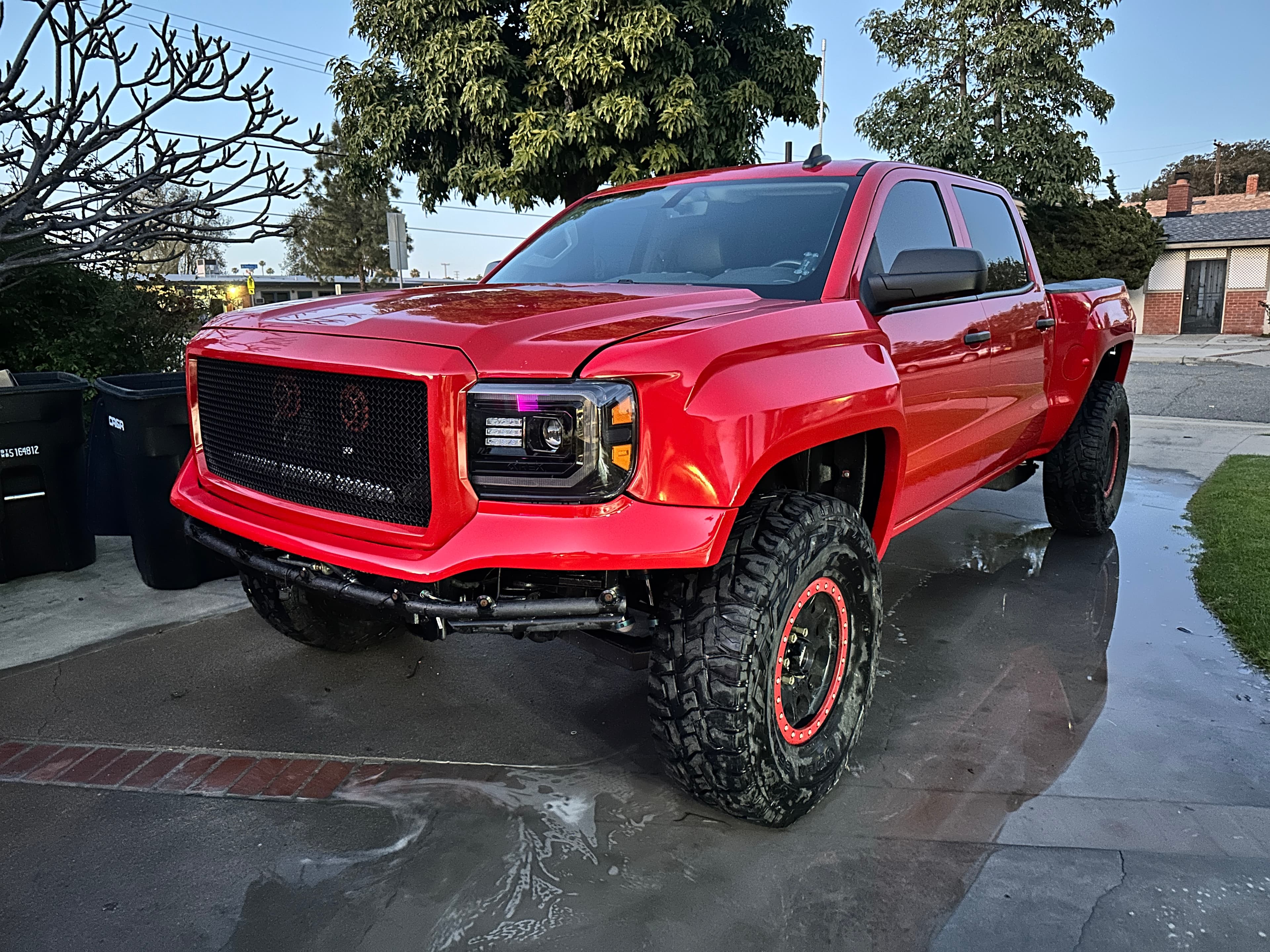
This is my 2015 GMC Sierra 1500, and it's on its third engine. The original 5.3 lasted about a month after I bought the truck — it let go in Johnson Valley, out at King of the Hammers. Its replacement was a fully built 6.2 with a Whipple on top — also a Golen Engine Service build: used block, new forged internals, Golen CNC-ported heads — and before it ever went in I tore it down myself for an investigative cleanup. That combination ran hard until December 23rd, 2024, when the blower let go — I have the video. And to be clear: the motor itself never failed, not by tune and not by neglect. The failure was all in the blower — the forged 6.2 came out healthy and sits in my garage today as a complete spare. But with the truck down anyway, I went bigger. What's in it now is engine number three: a Gen 5 416ci LT1 stroker built by Chad Golen of Golen Engine Service, topped with the same Whipple 2.9 — sent back to Whipple for factory service and repair. The full build sheet, for those who want it:
- Long block: new GMPP aluminum block, 10:1 compression, Wiseco forged pistons, Callies crank and rods, Katech oil pump, DOD and VVT deleted
- Heads and valvetrain: Golen CNC-ported cylinder heads carried over from the forged 6.2, BTR Gen V 4-inch-stroke supercharged camshaft, Johnson short-travel lifters (ST2126LSR), pushrods and valvetrain all upgraded for the combination
- Fuel: LT4 DI injectors and HPFP, plus a TooHighPSI port-injection system with 80 lb injectors, staged delivery for boost, fed by dual Aeromotive 340 in-tank pumps through dual -10AN lines. Flex-fuel sensor active, tuned on E85
- Boost and cooling: Whipple 2.9 with a 2.5-inch Griptec pulley, FI Interchillers Stage 2 intercooler system
- Exhaust: American Racing Headers 1-7/8-inch long tubes into 3.5-inch true duals, cat delete, dual Magnaflows, through-bed exit
- Driveline: 6L80 full Stage 3 build with Sonnax HD hard parts, billet planetary upgrades, Kolene steels, blue frictions, and a Dice Performance 10-inch multi-plate converter. 2WD
I'm the founder of TuneView. This truck is also my test mule. Everything below is real data from two rounds run through the same product you'd use — including the part where it reported two startup-idle recommendations as worse.
// 02 · WHY SELF-TUNE A BUILD LIKE THIS
My first experience with engine tuning, ever, was that 6.2 — and I didn't do it. It was tuned remotely by Ben Charles. And honestly? It was great. My mod list was static, but my mind wasn't, and the little things tested my tuner's patience — chalk that up to my greenness against his years of knowing the recipe. He was patient anyway and by default he taught me the way and the process, and I'm forever grateful for it. He also flat-out knew how to tune that thing — that motor never saw a tune-related failure in its life.
So when the 416 went together, going self-tune wasn't a rejection of any of that — it was the next evolutuion in my growth. It's the same reason i tore the old 6.2 apart when i smoked a lifter. I wanted to see it for myself. I wanted to know what the root casue was. That's just the way I am, and it's the same itch TuneView came out of. I knew i had no business tuning the new motor. I also knew this was probably me best chance at doing it for myself and with some basic precautions - i could avoid making the thing a paperweight. 416 cubic inches changes the airflow model over a "normal" 6.2. A Whipple changes the load range the factory calibration never sees. The feedback loop between "made an edit" and "verified it on data" is where a build like this lives or dies, and I wanted to run that loop myself, in my garage, the way I witnessed previously. If you're going to own it, you need something that reads your logs the way an experienced calibrator would — and tells you the truth about whether your last change worked.
That's the whole product: log in, upload, get findings and numbered edit instructions, make the edits, re-log, and let it judge its own advice.
// 03 · THE BASELINE LOG
Round 1 on this vehicle was not a boost fix. It was a light-cruise VE correction. Truth be told - i was a little nervous about getting into boost right away haha...
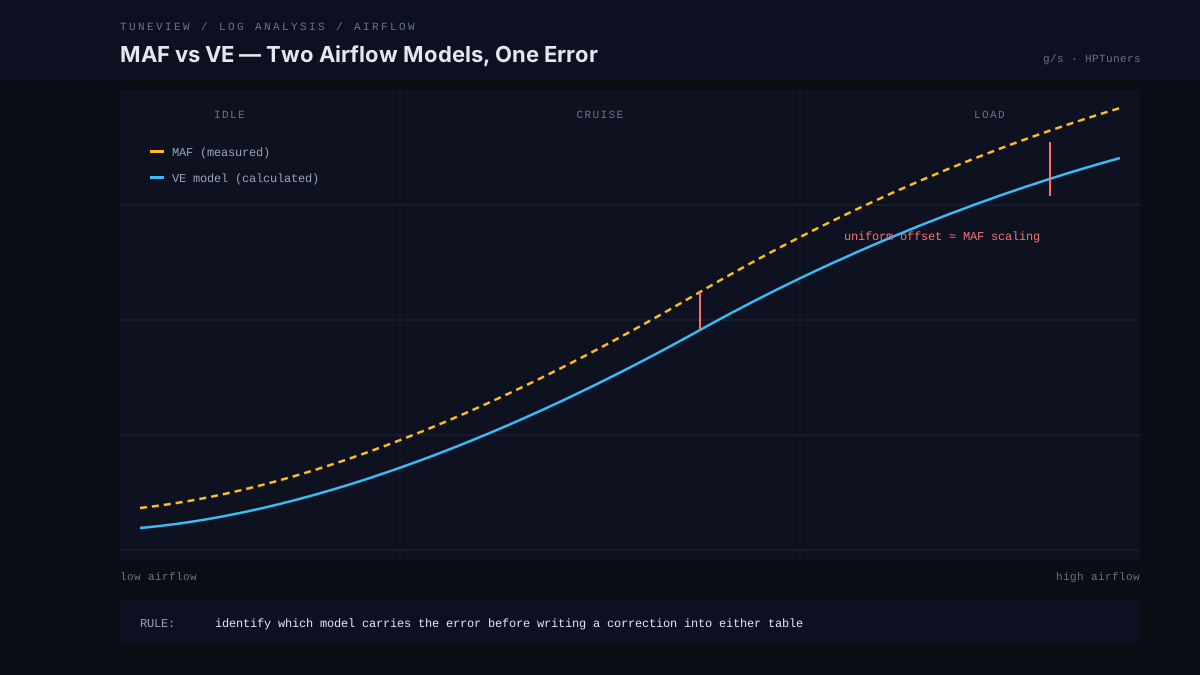
The headline finding was a virtual-VE, or airflow-model, mismatch in a light-load cruise region -- MAP/Baro 0.70-0.73, meaning the manifold was reading below atmospheric, nowhere near boost. The parser flagged four adjacent cells where the model needed a 9-11% airflow correction:
| Cell | Correction flagged |
|---|---|
| 2200 RPM, MAP/Baro 0.70 | +10.9% |
| 2200 RPM, MAP/Baro 0.73 | +10.5% |
| 2400 RPM, MAP/Baro 0.73 | +9.8% |
| 2600 RPM, MAP/Baro 0.73 | +9.4% |
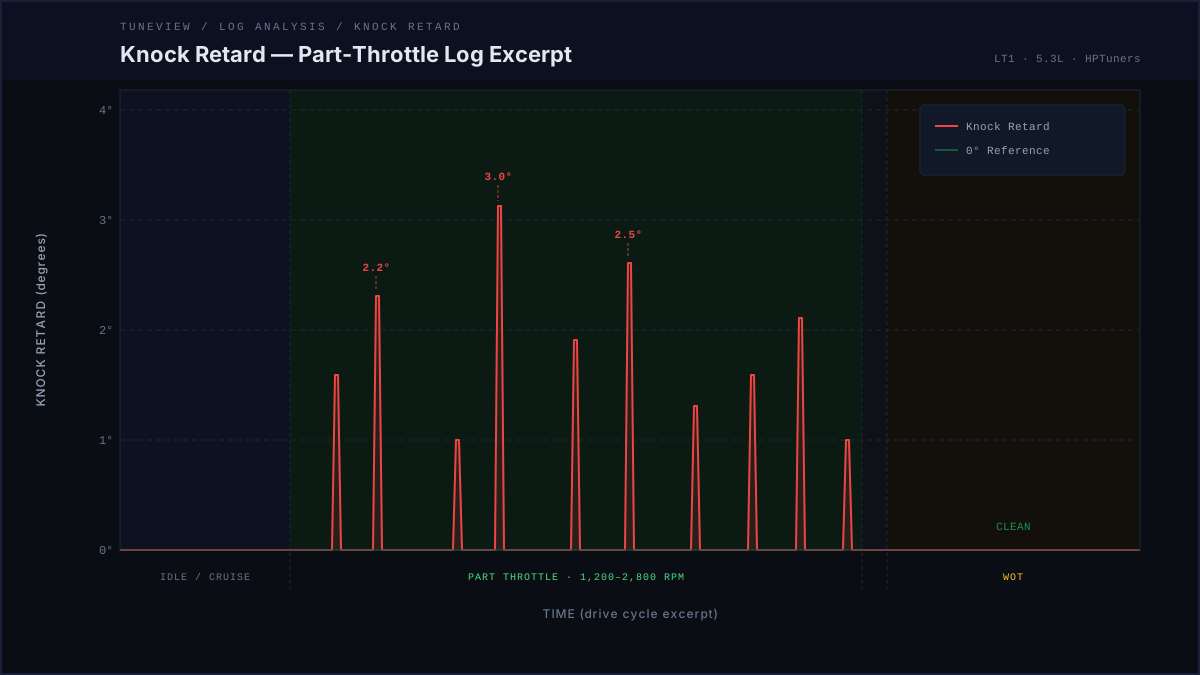
The rest of the report: LTFT bank 1 sitting at -2.17% (mild), knock retard peaking at 1.93 degrees with 13 samples at or below 0 degrees spark, and a startup flare that overshot target idle by 307 RPM (1,320 peak versus 1,013 settled). Five numbered revision steps came out of it: the VE correction above (priority 1), a second airflow-model pass centered on the exact logged pull window, a spark-table instruction to remove torque-mediated spark collapse before touching timing, and two startup-idle edits (flare window -8%, decay tail -10%). Tune grade: C (75/100).
// 04 · MAKING THE EDITS
The report's own sequencing puts airflow model first, so that's where I started. The instruction: open the VCM Editor's Virtual Volumetric Efficiency table (X = RPM, Y = MAP/Baro ratio), confirm the VE Mode drop-down matches the engine -- VVT versus non-VVT; wrong mode edits coefficients the ECM never reads -- and touch all four flagged cells in the same session so the surface doesn't step:
| RPM | MAP/Baro | Delta | Logged cylinder airmass |
|---|---|---|---|
| 2200 | 0.70 | +10.9% | 0.44 mg/cyl |
| 2200 | 0.73 | +10.5% | 0.48 mg/cyl |
| 2400 | 0.73 | +9.8% | 0.49 mg/cyl |
| 2600 | 0.73 | +9.4% | 0.53 mg/cyl |
Apply each delta to the original cell, smooth the adjacent rows and columns so there is no single-cell spike, click Calculate Coefficients, save as a new version, and flash. The pull only had data in this window, so I did not edit cells I had not measured. Round 2 found a different set of cells that needed the same treatment. That is the point of the second round.
// 05 · THE RE-LOG AND THE VERDICTS
The next round used the same truck and vehicle profile. My own case note at upload: "Round 2 re-log after applying Round 1 VVE/fueling revisions." TuneView brought up Round 1's five steps and judged each one against measured deltas between the two logs.
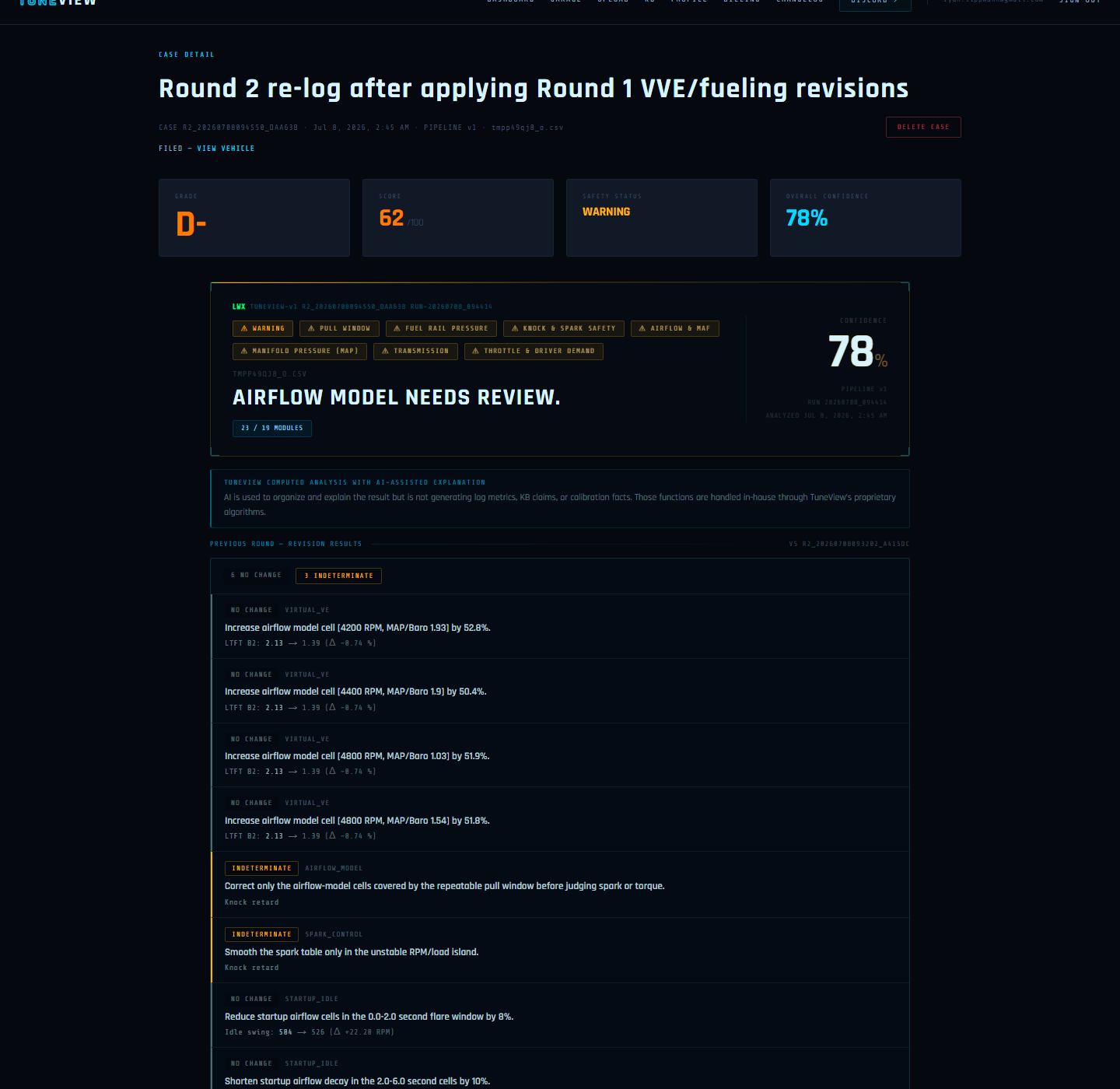
| Round 1 step | Metric judged | Before to after | Verdict |
|---|---|---|---|
| VE correction, 4 light-load cells | LTFT B1 | -2.17% to -0.85% | no change |
| Airflow-model second pass | MAF spread | 680.8 to 5,703.8 g/s | improved |
| Spark table / torque-mediated drop | Knock retard | 1.93 degrees to 2.64 degrees | no change |
| Startup idle, flare window -8% | Idle swing | 430.5 to 526.0 RPM | worse |
| Startup idle, decay window -10% | Idle swing | 430.5 to 526.0 RPM | worse |
One improved. Two no change. Two worse. That last pair is the honest part: the startup-idle recommendations, aimed at a 307 RPM flare overshoot in Round 1, scored worse on the re-log. Idle swing got bigger, not smaller. TuneView did not soften that. The measured delta (95.5 RPM) blew past the 25 RPM threshold in the wrong direction, and it called it worse.
The airflow-model fix is the one that actually worked -- MAF spread cleared its improvement threshold outright, and the module grade backs it up: the tune moved from a C (75) to a B- (82) overall. But the report didn't call the airflow story closed. A new virtual-VE finding showed up in Round 2, this time at 4,600-5,000 RPM, MAP/Baro 1.42-1.54, deltas up to +50.9% -- a genuine high-boost region the Round 1 fix never touched, because it was never the same cells. That's the loop working as designed: fix what you measured, re-log, and let the next pull tell you what's next.
Round 2 also surfaced a new primary issue with nothing to do with airflow: across 1,643 repeated samples, throttle trailed pedal position by an average of 9.8% (peak 77.7%) -- torque management strangling tip-in. Recommendation: reduce the driver-demand/peak-torque cells at 12-32% pedal by 8%. And the spark-table instruction repeated, with the underlying number slightly worse than Round 1: minimum spark -10.5 degrees this time (was -10.0), on more samples at or below 0 degrees.
// 06 · WHAT IT DIDN'T CATCH, AND WHAT'S SINCE CHANGED
The "improved" MAF-spread verdict in the table above isn't a gimme. For a while, every airflow-model and VE-table revision step, regardless of what region of the table it touched, was judged against LTFT, a closed-loop metric. Long-term trims are frozen out in the open-loop cells those edits actually target, so a real fix could score "no change" on a metric that was never going to move.
That's fixed: airflow-model and VE-table steps now score directly against MAF spread, and the verdict table above is running on that corrected logic. The one row that says "improved" is the fix, live, on this exact case.
What the table does not paper over is that two startup-idle recommendations made the measured result worse. The flare overshot target idle by 307 RPM in Round 1; the next-round result says the recommendation did not improve it. The next pass will be documented the same way, verdict included, whichever way it goes. Startup flare was a pretty long learning process for both me and the software, but eventually it got it. I'm still learning - as can be evidenced by my 90+ runs through the system. If im logging it im running it through - why not, right? It's fun to train the model and to learn something new about the truck along the way. Plus 9 times out of 10 i have something new that im trying to extract the most out of on the motor. It's a vicious cycle...
// 07 · RUN YOUR OWN LOOP
Full Tune is $69 one-time for one vehicle/motor, with unlimited analyses and revision rounds and no expiration. It includes the full round-over-round loop shown above.
Upload the log you already have: app.tuneview.io
For a VVE or MAF follow-up, you can also copy the table from VCM Editor with Copy with Axis and paste it into TuneView alongside the next log. That lets the revision compare against the actual cells in your calibration. See the table-paste guide.