Fuel trim is one of the most informative channels in any engine management log. It's also one of the most misread.
This is a practical breakdown of how to interpret STFT and LTFT on a GM Gen V LT1, what the common error patterns look like, and when fuel trim values should trigger action vs. when they're operating as intended.
The Basics
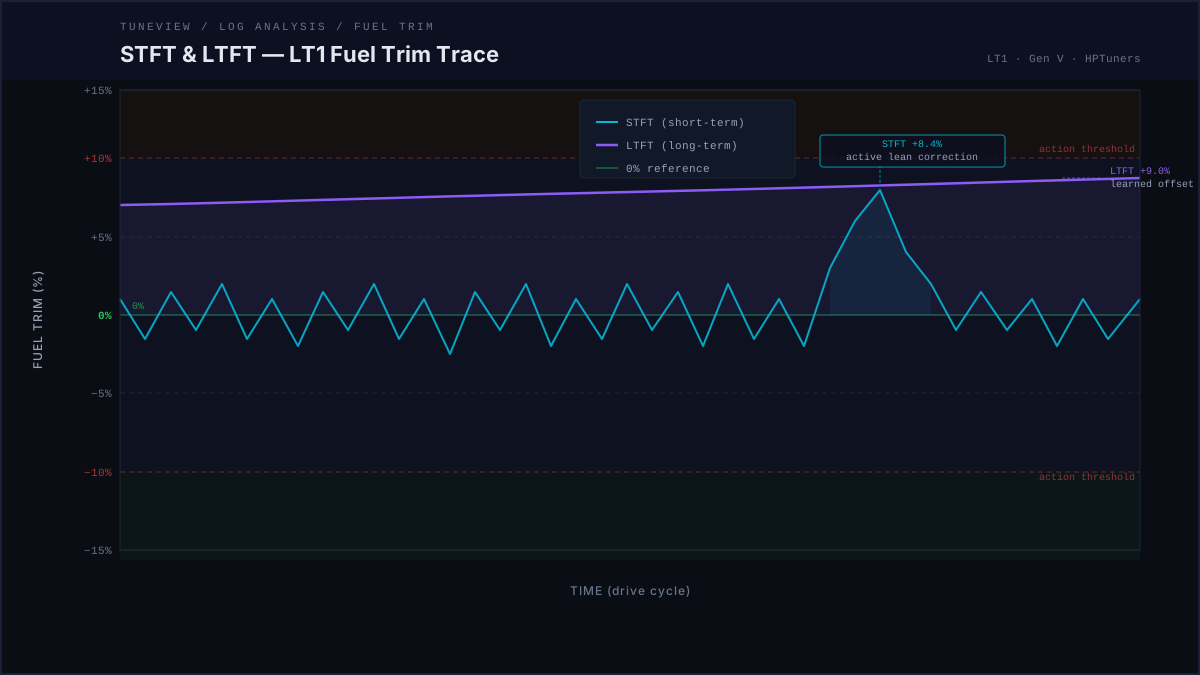
STFT (Short-Term Fuel Trim): The ECM's real-time correction to commanded fueling, based on upstream O2 sensor feedback. A positive value means the ECM is adding fuel. A negative value means it's removing fuel.
LTFT (Long-Term Fuel Trim): The learned correction the ECM carries forward across ignition cycles. The ECM accumulates STFT corrections over time and folds them into LTFT, so it doesn't have to make the same short-term correction every time.
Together: Target AFR = commanded AFR × (1 + STFT/100) × (1 + LTFT/100)
The ECM targets a combined fuel trim close to 0% across most operating conditions. When both STFT and LTFT are near zero, the MAF calibration is accurate and the fueling tables are correct.
What Normal Looks Like
On a stock or lightly modified LT1 with accurate MAF calibration:
- Idle: LTFT ± 3–5%, STFT fluctuating ±5–8% as the closed-loop system hunts
- Cruise (steady throttle): LTFT ± 3%, STFT ± 3–5%
- Light acceleration: LTFT ± 5%, STFT responding quickly, returning to near-zero
- WOT: Fuel trim typically goes open-loop. These numbers are less meaningful at full power enrichment
Values in these ranges indicate the fueling system is working correctly. The closed-loop system is designed to operate with some correction. A perfectly flat 0% LTFT is neither expected nor required.
Error Patterns Worth Acting On
Pattern 1: High Positive LTFT at Idle, Corrects at Cruise
What it looks like: LTFT at idle: +8 to +12%. LTFT at cruise: +2 to +4%.
What it means: The MAF calibration is accurate at higher airflow rates (cruise), but the ECM is commanding too little fuel at idle. This is the classic sign of a vacuum leak: unmetered air entering after the MAF, diluting the mixture only at idle where airflow is lowest.
Check: Smoke test for vacuum leaks. Common culprits on LT1s: intake manifold gaskets, PCV system, brake booster line.
Note: Also can indicate a fuel delivery issue. If fuel pressure drops at idle, you'll see similar LTFT behavior. Differentiate by checking fuel pressure channel if logged.
Pattern 2: High Positive LTFT Everywhere (Idle and Cruise)
What it looks like: LTFT: +8 to +15% at all operating conditions.
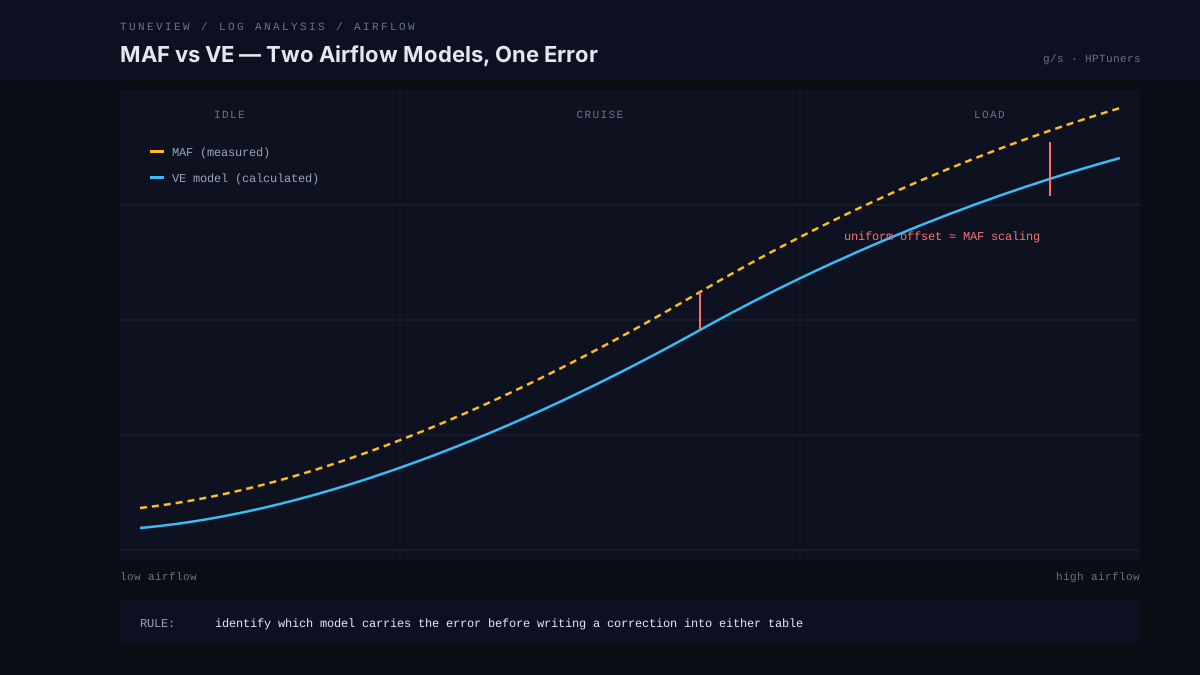
What it means: The ECM is consistently commanding more fuel than the fuel tables dictate. This is typically a MAF calibration issue: the MAF is under-reading actual airflow, so the ECM compensates with LTFT.
Most common cause on modified LT1s: Aftermarket intake without MAF recalibration. Cold-air intakes and filter relocations change the airflow profile through the MAF housing. If the MAF calibration wasn't updated, LTFT absorbs the error.
Check: If you have a wideband and have logged actual AFR vs. commanded, compare. If actual AFR at cruise is consistently leaner than commanded, MAF calibration is the likely fix.
Pattern 3: Negative LTFT Everywhere
What it looks like: LTFT: -6 to -10% consistently.
What it means: The ECM is removing fuel because the mixture is running rich. On a stock LT1, this is unusual and worth investigating.
Common causes:
- Injector leak / stuck open injector (rich on one or two cylinders, LTFT pulls globally)
- MAP sensor over-reading (ECM calculates too much fuel from load estimate)
- Fuel pressure too high (overpressure saturates injector pulsewidth)
On modified engines: If you've upgraded injectors and haven't updated the injector flow rate in the calibration, the ECM will run rich and pull LTFT down to compensate. The trim will be large (often > -10%) and consistent.
Pattern 4: LTFT Fine, STFT Consistently High One Direction
What it looks like: LTFT at ± 3%. STFT consistently at +7 to +10% and never returning to near-zero.
What it means: There's a continuous fueling error that the LTFT hasn't fully learned yet, or an intermittent condition the ECM can't learn from. STFT is working overtime compensating for something LTFT hasn't absorbed.
Common cause: Intermittent MAF signal, or a condition that only appears under certain drive cycles. Log more data across varied conditions before drawing conclusions.
Where Gen V Differs From Gen IV
If you're familiar with LS tuning and moving to Gen V, a few fuel trim differences worth noting:
Direct injection changes the stoichiometry model. The DI system runs higher in-cylinder pressure and the injector timing strategy is more complex. Small MAF errors affect fueling differently than they did with port injection.
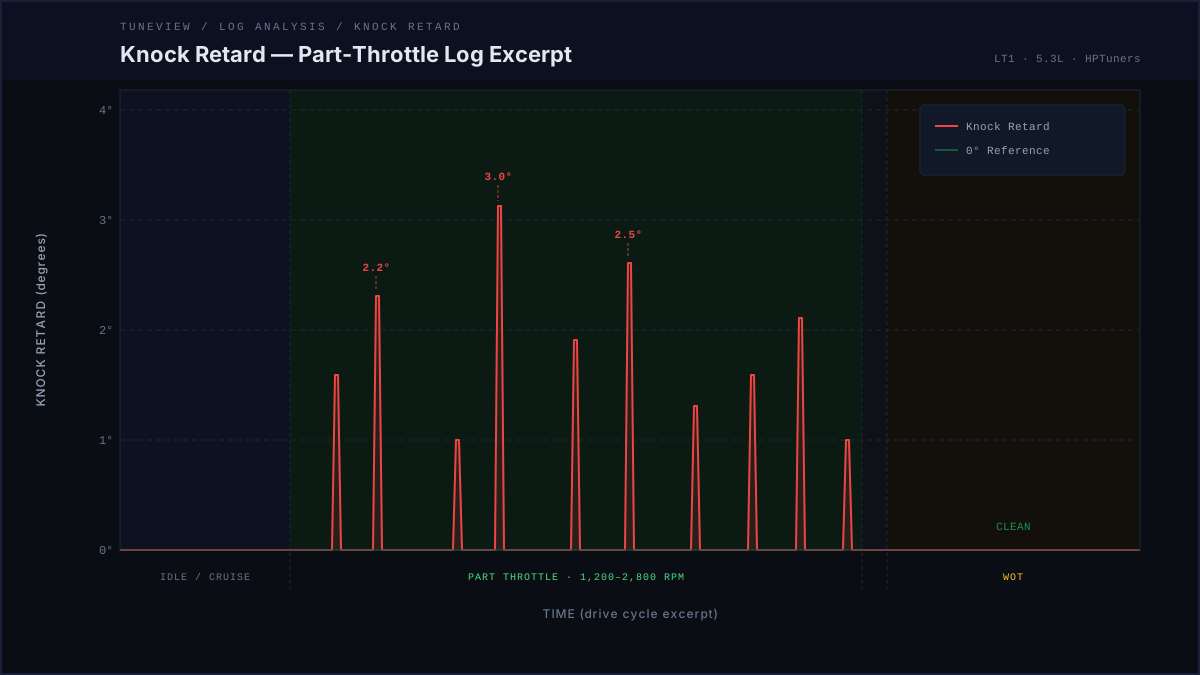
The knock/fuel trim interaction is tighter. On the Gen V, the ECM's fueling corrections and knock retard decisions are more interlinked. A lean-running LT1 (positive LTFT) will often show increased part-throttle knock events, not because the calibration is wrong, but because the lean mixture raises cylinder temps and the knock sensor responds.
Per-cylinder trim is available. Gen V logs can capture per-cylinder injector pulse width data. If you suspect a cylinder-specific fueling issue (cylinder 4 running rich, for example), you can isolate it without guessing.
Using Fuel Trim in Your Log Review Workflow
A practical routine for every log:
- Check LTFT at idle, cruise, and light acceleration. Flag anything > ±5% for further review.
- If LTFT is high positive, look for vacuum leaks before touching the VE table.
- If LTFT is uniformly high in both directions, look at MAF calibration.
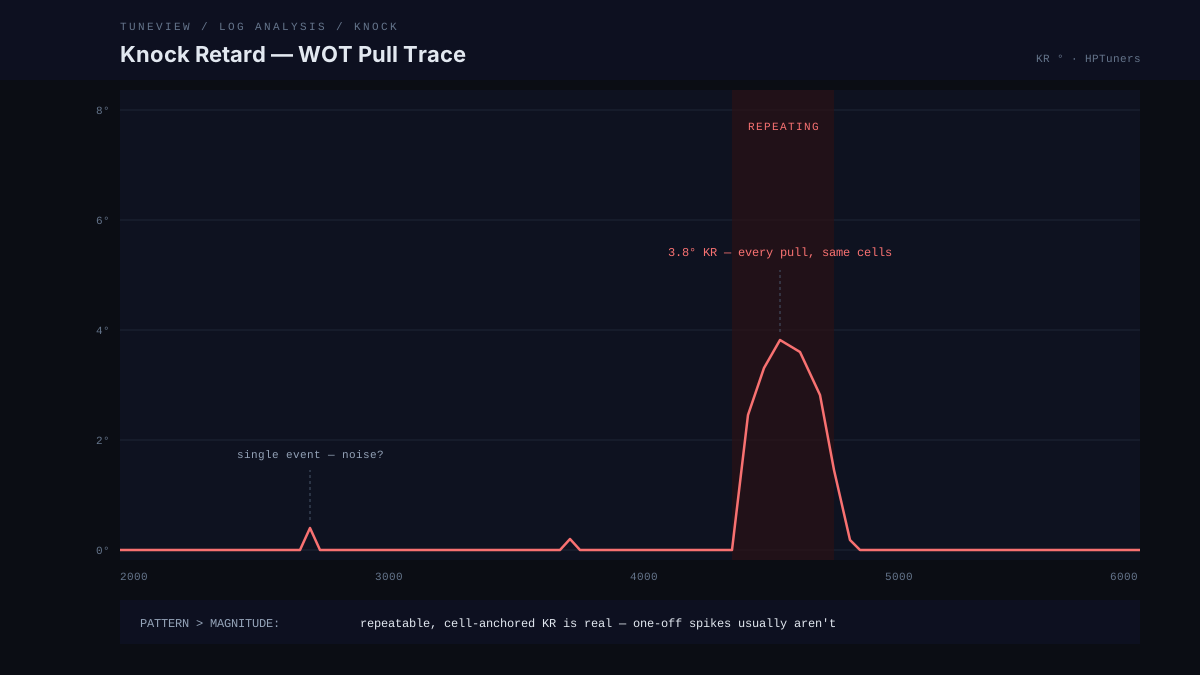
- Cross-reference LTFT with knock retard events. Lean-running engines (positive LTFT) often show elevated part-throttle knock. Fix the fueling before addressing timing.
- Check STFT response time. If STFT is slow to return to zero, the O2 sensors may be aging or the closed-loop response is misconfigured.
Seeing This in Your Own Logs
TuneView analyzes STFT and LTFT automatically on every log. It identifies the patterns above and classifies them by likely cause.
If you want to run your LT1 logs through it:
If the follow-up points to airflow calibration, paste your VVE table or MAF curve with Copy with Axis alongside the next log. See the table-paste guide.
TuneView turns HPTuners logs into guided calibration revisions for GM Gen V vehicles. LT1, LT4, L83, and L86 support is live. Full Tune is $69 one-time for one vehicle/motor, with unlimited analyses and revision rounds and no expiration.