When you tune an LT1, you check the WOT pull. Timing looks clean. AFR is where it should be. Knock retard is zero or near-zero across the power band. Tune logged, customer out the door.
The part-throttle data tells a different story.
What We Found
During the development of TuneView, we analyzed a large volume of GM Gen V log files submitted by HPTuners users. The majority of the data came from LT1-equipped vehicles: C7 Corvettes, 6th gen Camaros, and Silverado/Sierra trucks with the 5.3 or 6.2.
One pattern appeared so consistently that we built a dedicated detection rule for it:
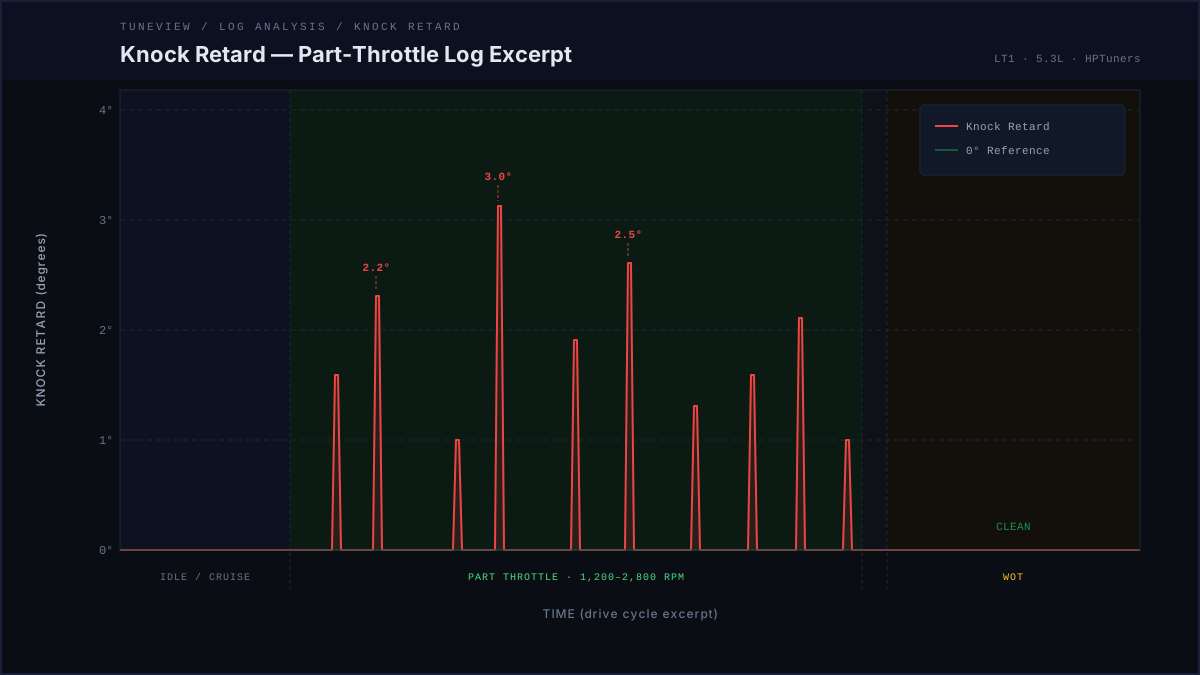
Many LT1 logs show recurring knock retard events at part throttle, in the 1,200–2,800 RPM range, under light to moderate load, that do not appear at WOT.
The events are typically small: 1–3° of retard, brief (200–500ms recovery time), and distributed inconsistently across cylinders. On any given drive cycle, they show up multiple times, sometimes dozens of times, but they're buried in the middle of the log file, not at the part of the data you're looking at.
If your review workflow is "check the WOT pull, verify AFR, call it done," you will never see these events.
Why This Happens
The Gen V knock sensing system is more aggressive than Gen IV. The ECM uses a two-accelerometer setup with a dedicated knock signal processor, and it's tuned to detect knock earlier in the cycle than previous generations.
In the 1,200–2,800 RPM range at light load, the LT1's direct injection system creates a specific acoustic signature. DI injectors are louder than port-injection equivalents, and the noise floor in that RPM band is higher. The knock sensor registers that acoustic energy. The ECM, interpreting it as a potential knock event, pulls timing briefly.
In most cases, this is not actual detonation. The cylinder pressure at light load isn't high enough to support knock in a properly calibrated engine. What you're seeing is the ECM's noise-rejection algorithm failing to filter out a persistent mechanical frequency.
The pattern is more pronounced when:
- IAT is elevated (above 90°F ambient)
- The vehicle has been heat-soaked (coolant temp > 200°F)
- Stock knock sensor frequencies are used with aftermarket intake or exhaust that changes resonance characteristics
Why It Matters
For street cars and lightly modified vehicles, this pattern is cosmetic. The retard events are small enough that drivability and power aren't meaningfully affected.
For shops doing aggressive calibration work (cammed engines, forced induction, E85 conversions), it matters more:
1. Diagnostic noise. When you're iterating on a tune and trying to identify real knock events, part-throttle noise events create false positives. A log that shows 40 knock retard events looks alarming until you isolate that 38 of them are in the 1,500 RPM / light throttle zone and three are at WOT on cylinder 4. The three are the ones to fix.
2. Calibration interference. If you're running a knock retard adaptation strategy (enabled in some calibration tables), the ECM accumulates those part-throttle events and adjusts timing globally. A noisy knock sensor in this RPM range can cause the ECM to pull timing in cells you calibrated correctly.
3. Customer perception. A customer who data-logs their own car and sees "40 knock events" in a week is going to call you. Being able to explain which events are mechanical noise vs. actual detonation events worth addressing is a meaningful differentiator in how you communicate the tune.
How to Identify It in Your Own Logs
Look for these signatures together:
- Knock retard events clustered in 1,200–2,800 RPM
- Light load (MAP < 80 kPa, throttle < 25%)
- Inconsistent cylinder distribution (not the same cylinder every time)
- Fast recovery (retard cleared within 200–500ms)
- Correlation with IAT or coolant temp (events more frequent when warmer)
If you see that pattern, and the same log shows clean behavior at WOT, you're looking at sensor noise, not a calibration problem.
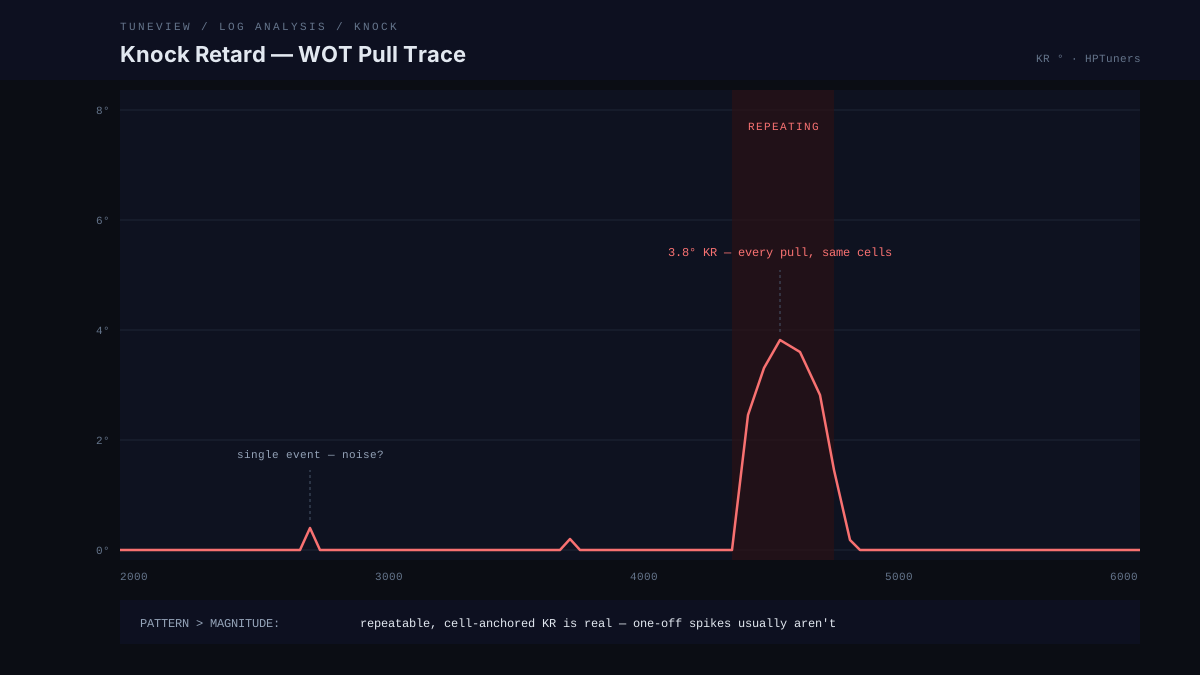
If you see knock retard events at WOT, on the same cylinder repeatedly, under high load, that's the thing to investigate.
One More Thing
The reason this pattern is hard to catch manually isn't laziness. It's data volume. A 30-minute log file at 25Hz sampling has 45,000+ data points per channel. Manually correlating RPM, MAP, throttle position, and knock retard across four cylinders, for 45,000 rows, isn't realistic as a routine step in every log review.
This is exactly the problem TuneView was built to solve. The pattern above is one of several rules TuneView runs automatically on every Gen V log. It identifies knock events, classifies them by likely cause, and flags the ones worth acting on separately from the mechanical noise.
If you want to see whether this pattern shows up in your own logs:
TuneView turns HPTuners logs into guided calibration revisions for GM Gen V vehicles. LT1, LT4, L83, and L86 support is live. Full Tune is $69 one-time for one vehicle/motor, with unlimited analyses and revision rounds and no expiration.